

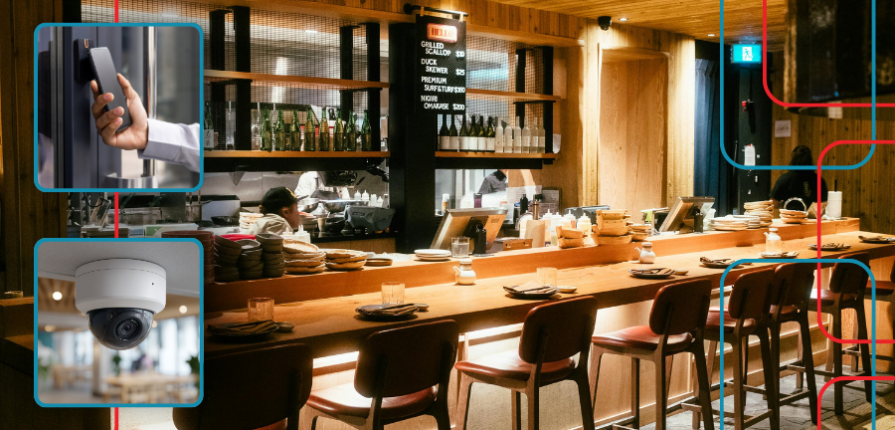
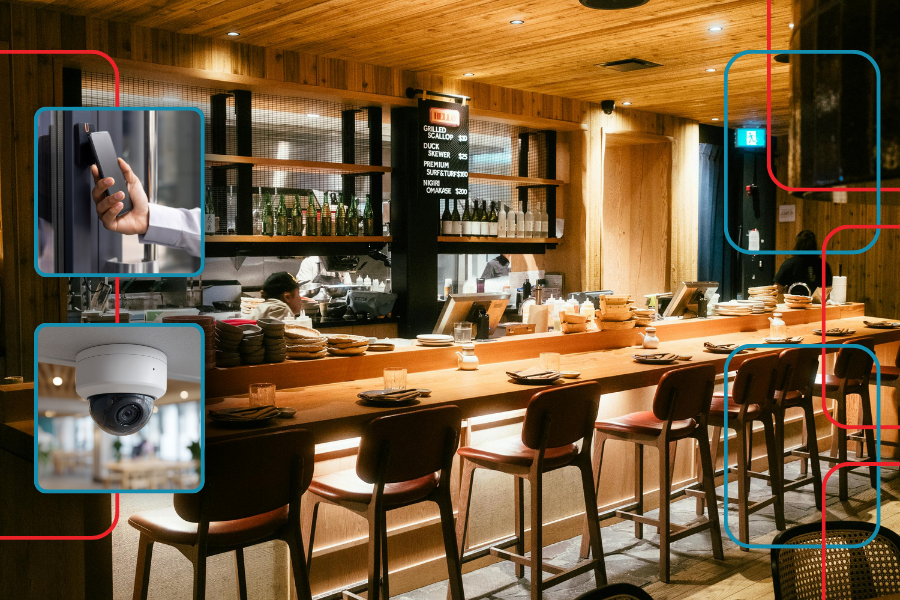
Most restaurant security systems aren’t tested during installation, they’re tested during service, and that usually happens in quieter moments rather than obvious ones. A transaction needs to be reviewed, a delivery needs to be confirmed, or a manager needs to understand what happened in a specific part of the building. The system is there, but it doesn’t always line up with what’s being asked of it, which is where gaps tend to surface.
That gap is rarely caused by the equipment itself. It usually comes from how the system was designed in the first place.
It’s not the equipment, it’s where it’s pointed
Walk through a restaurant during a busy shift and the activity isn’t evenly distributed. The bar has its own pace, the kitchen moves differently, and staff pass through certain areas constantly while others remain quiet. When camera systems are set up to cover space instead of activity, the result tends to be consistent. Everything is recorded, but not everything is useful when it needs to be reviewed.
ACRT approaches camera placement from a different starting point. Instead of focusing on how much area can be covered, the conversation centers on where questions tend to come from. That usually includes point-of-sale areas, bar tops, movement between the kitchen and front-of-house, delivery entrances, and back-of-house spaces where inventory is handled. When those areas are covered clearly, the system becomes easier to rely on without adding unnecessary complexity.
The system should reflect how the shift actually runs
Restaurants don’t operate in a straight line, and the flow of a shift changes throughout the day. A lunch service looks different from dinner, and late hours carry a different pace than early prep. Staffing adjusts as the day moves forward, and responsibilities shift with it.
A system that was set up around a static layout doesn’t always keep up with those patterns, which is why ACRT designs and adjusts systems to reflect how the space is actually used across a full shift. That includes how cameras are positioned, but it also includes how footage is organized and how quickly it can be reviewed. If finding the right moment takes too long, the system isn’t doing much to support the operation.
Access control tends to fall behind quietly
Access in restaurant environments is rarely fixed. Staff move between roles, managers rotate schedules, and keys tend to circulate more than anyone intends. Over time, it becomes less clear who should still have access to offices, storage, or certain entrances, and while nothing may seem broken, the system becomes harder to manage.
ACRT installs access control that reflects how the team is structured rather than relying on how the building is laid out. Permissions can be adjusted as roles change, which keeps access organized without slowing down daily operations or adding friction during service.
Many restaurants are working around what they inherited
It’s common for restaurants to move into spaces where a system is already in place, and in many cases that system is still partially functional. Cameras are mounted, wiring exists, and replacing everything isn’t always necessary or practical.
ACRT regularly takes over existing systems and brings them into a structure that’s easier to manage. That might involve repositioning cameras, improving coverage in key areas, or integrating existing equipment into a platform that’s more usable day to day. The goal is not to start over, but to make what’s already there work in a way that supports the business.
Reliability shows up during the busiest hours
Restaurants don’t leave much room for systems that require attention during service. When something goes offline or doesn’t behave the way it should, it becomes noticeable immediately, especially during peak hours when staff are focused on customers rather than troubleshooting equipment.
That’s why ACRT places as much emphasis on installation quality and system stability as it does on design. Clean infrastructure and consistent performance allow the system to hold up under real conditions, which matters more than adding features that won’t be used.
What restaurant owners usually want from the system
Most restaurant owners aren’t looking for something complicated. They want to be able to answer questions when they come up and trust that the system is capturing what it needs to. When security is aligned with how the restaurant operates, it becomes part of the routine rather than something that needs constant attention.
ACRT works with restaurants across the Minneapolis–St. Paul area to build and support systems that match the pace and structure of hospitality environments. If you’re opening a new location, expanding, or working around a system that doesn’t quite reflect how your restaurant runs, ACRT can help. You can contact our team here or call (612) 512-0428 to talk through your setup.
Leave a Reply